
Visiting Strasbourg for the first time, my initial intention was simply to soak up the historical and architectural charm of this city situated at the crossroads of French and German culture. However, as I truly began to wander through its streets and alleys, I discovered that—beyond the half-timbered houses lining the canals and the magnificent cathedral—what truly lingers in one’s memory here is the array of cuisine brimming with distinct Alsatian character.
As a major city in northeastern France, Strasbourg—and the wider Alsace region in which it sits—has long been shaped by the dual influences of French and German culture. Consequently, the local culinary style presents a unique fusion: rich, hearty, and focused on the natural flavors of fresh ingredients, yet retaining the inherent elegance of French gastronomy. During my few days of travel, I devoted a significant amount of time to exploring restaurants, cafés, and traditional taverns. Among these experiences, the highlights that left the deepest impression on me were the German-style sausage platter, the Alsatian tartes flambées, and the local cider.
These flavors not only served as my introduction to Alsatian culinary culture but also became the most vivid and enduring part of my memories of Strasbourg.
Arrival in Strasbourg: Culinary Anticipation Awakened by Street Scents
On the afternoon of my first day in Strasbourg, I found myself strolling through the picturesque Petite France district.
Traditional restaurants lined the cobblestone streets; wrought-iron signs hung beneath the eaves of half-timbered houses; and the air was filled with the mingled aromas of roasting meats and cream.
At that moment, having just dropped off my luggage, I had no concrete plans for where to dine.
However, as evening approached, the restaurants along the streets began to fill up with patrons. People chatted over raised glasses of wine, while servers bustled through the crowd, bearing steaming platters of food.
I suddenly realized that in Strasbourg, savoring the local cuisine is not merely a means of satisfying one’s hunger; it is a vital way to immerse oneself in the rhythm of local life.
And so, I decided to dedicate a significant portion of my travel itinerary over the coming days to exploring the Alsatian table.
The German-Style Sausage Platter: Alsace’s Most Classic Flavor
Upon arriving in Strasbourg, one dish is recommended by almost every traditional restaurant: Choucroute Garnie.
Although many Chinese-language guides refer to it simply as “German-style sausage,” in reality, it is much more—a hearty, classic Alsatian platter featuring an assortment of meats.
That evening, I made a deliberate choice to dine at a traditional tavern that had been a local institution for many years. Wooden tables and chairs, soft amber lighting, and vintage photographs adorning the walls imbued the entire space with a profound sense of history.
When the waiter brought the Choucroute Garnie to my table, I was taken aback by its sheer size.
A massive platter was piled high with sauerkraut, sausages, ham, and various cuts of meat, with steam rising continuously from the dish.
At the very bottom lay sauerkraut that had been stewed for hours, topped with an assortment of sausages and pork.
With the very first bite, I immediately sensed the influence of German culinary culture.
The sausage skins were slightly crisp, while the meat inside was firm and juicy.
The sauerkraut carried a distinct aroma of fermentation and a tangy acidity, providing a striking contrast to the richness of the meats.
What surprised me most was that, despite its hearty appearance, the dish never felt heavy or greasy.
The sauerkraut perfectly counterbalanced the richness of the meat, bringing the overall flavor profile into perfect harmony.
Sitting by the window—savoring this sumptuous dinner while watching the lights of Petite France shimmer upon the canal—I suddenly felt as though I had truly settled into the rhythm of Alsatian life.
Flammekueche: A Simple Yet Addictive Alsatian Flatbread
The following midday, I decided to try another iconic local specialty: Flammekueche.
Many tourists, upon seeing it for the first time, remark that it bears a resemblance to pizza.
However, once you actually taste it, you discover that the two are entirely different.
I found a small, well-regarded bistro near the Strasbourg Cathedral.
In the open kitchen, a chef was busily preparing the flatbreads with rapid, practiced movements.
Before long, a freshly baked Flammekueche was placed before me.
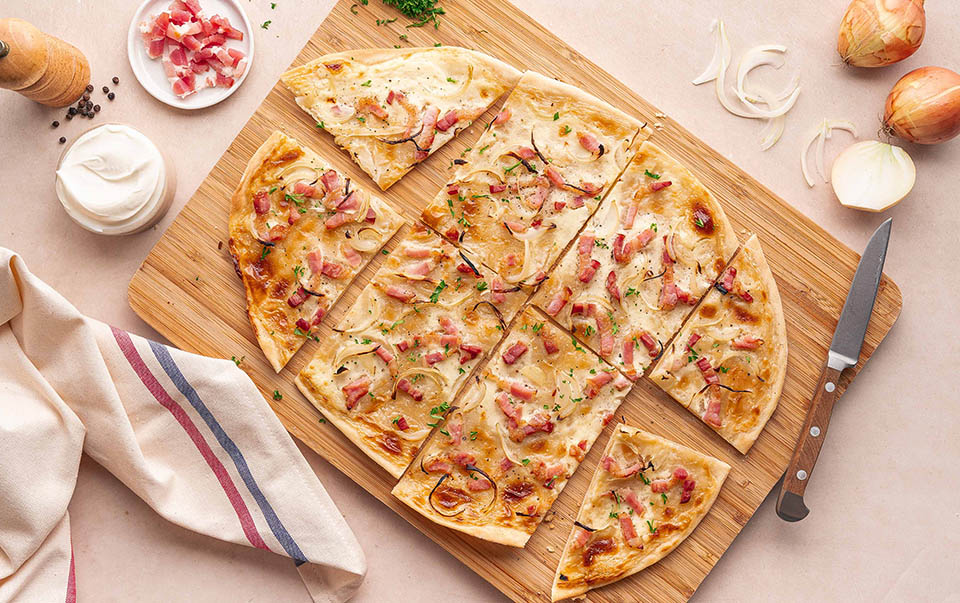
The ultra-thin crust was topped with cream, onions, and bacon.
Its edges were baked to a light golden-brown crisp—a truly enticing sight.
I cut off a slice and took a bite.
The first sensation was the delightful crispness of the crust.
This was followed by the richness of the cream, the sweetness of the onions, and the savory saltiness of the bacon.
Each flavor was simple in itself, yet when combined, they created a remarkably harmonious blend.
This dish relies on neither complex seasonings nor elaborate techniques; instead, it serves to showcase the inherent appeal of its ingredients to the fullest extent.
As I ate, I gazed through the window at the tourists milling about the cathedral square. Sunlight bathed the ancient architecture, while before me lay a traditional delicacy—a culinary legacy spanning centuries.
This sense of connection across time made this particular lunch feel truly extraordinary.
Cider: The Gentle Buzz of Alsace
Beyond the main courses, the beverages of the Alsace region are equally impressive.
One of the most iconic among them is Cidre Alsacien (Alsatian Cider).
On the afternoon of my third day, I sat down to rest at an open-air bistro beside the canal.
The weather was delightful; the sunlight was warm, yet never scorching.
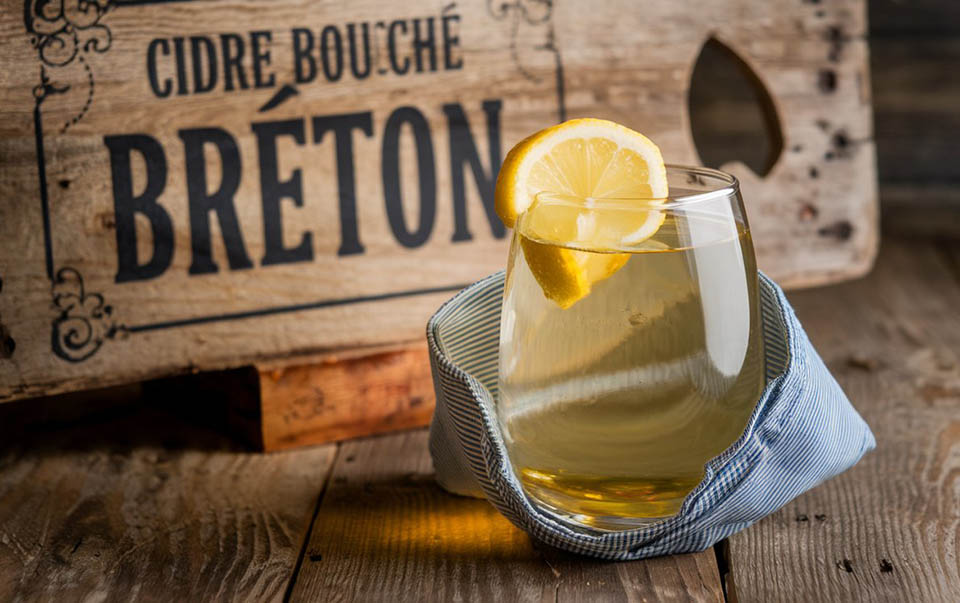
I ordered a glass of the local cider.
As the clear liquid was poured into a stemmed glass, it shimmered with tiny bubbles, looking incredibly refreshing.
With the very first sip, the aroma of apples immediately blossomed on my palate.
Unlike traditional wine, it felt lighter and went down much more easily.
The balance between sweetness and acidity was absolutely perfect, accompanied by a delicate fruity fragrance.
As I sat by the water’s edge, slowly savoring my drink, I suddenly understood why the locals love to enjoy a glass of cider in the afternoon.
It lacks the intensity of spirits and the heaviness of beer; instead, it serves as a lighthearted and delightful companion.
That afternoon, I made no attempt to rush through my itinerary; I simply sat in quiet contemplation.
I watched the tour boats glide past, listened to street performers playing music, and observed the sunlight as it slowly shifted across the scene.
And throughout it all, the cider served as the perfect backdrop for those moments of unhurried leisure.
The Flavors of Alsace in the Marketplace
To gain a deeper understanding of the local culinary culture, I made a special trip to a traditional market in Strasbourg.
The market stalls were laden with cheeses, sausages, jams, and freshly baked breads.
Many of the vendors would enthusiastically invite visitors to sample their wares.
I tasted several different varieties of sausage.
Some were infused with herbs, others possessed a smoky flavor, while still others featured a blend of unique local spices.
Compared to mass-produced, industrial sausages, these retained a far more authentic, natural meat flavor.
On the other side of the market, an array of apple-based products was on display.
Cider, apple jams, and apple desserts could be found at every turn.
I purchased a small bottle of cider as a souvenir, hoping to bring a taste of Alsace back home with me.
The Cultural Fusion Behind the Cuisine
As my journey progressed, I came to realize that Strasbourg’s culinary landscape is, in essence, a microcosm of the city’s history. This region has changed hands between France and Germany numerous times throughout history.
Consequently, both its architecture and its cuisine bear the deep imprint of these two distinct cultures.
Choucroute Garnie embodies the hearty abundance and practicality characteristic of traditional German fare.
Flammekueche, conversely, reflects the French dedication to ingredient quality and culinary precision.
Cider, meanwhile, stands as a testament to the evolution of Alsace’s agricultural and brewing heritage.
These culinary delights do more than merely satisfy the palate; they tell the story of this land.
Strasbourg: A Culinary Journey
As I departed Strasbourg, my suitcase was filled with souvenirs, while my memories were imbued with the flavors of Alsace.
The rich abundance of Choucroute Garnie, the crisp simplicity of Flammekueche, and the refreshing fruitiness of Cidre Alsacien—together, they paint a unique culinary landscape.
The allure of this city lies not only in its historic architecture and cultural heritage but, even more so, in the stories hidden within its dining tables.
To me, Strasbourg is a city meant to be savored slowly.
And each traditional dish serves as a key, unlocking the very essence of this city.