From the moment I first set foot in Strasbourg, I was deeply captivated by the city’s unique character. It lacks the ostentation of Paris and the languid charm of the ports in the South of France; yet, every street and every building exudes a distinct blend of history and culture—possessing both French elegance and German precision. To me, this city feels like a living history book, where every step allows one to sense the collision and fusion of different civilizations.
Entering La Petite France: The Romance of Waterways and Half-Timbered Houses
I chose to begin my Strasbourg journey in the district known as La Petite France. The streets in the early morning were still shrouded in a thin veil of mist, and the waters of the canal mirrored the surrounding half-timbered houses—their wooden beams weathered yet exuding a sense of warmth, as if every plank held the stories of centuries past.
Strolling slowly along the cobblestone alleys, I wandered into a café on a whim. The air inside was still fragrant with the scent of freshly baked bread; I ordered a cappuccino, took a seat by the window, and watched as small boats glided gently across the canal. The morning light dancing on the water’s surface intertwined with the reflections of the timbered houses—a moment of such profound tranquility that I found myself reluctant to leave.
I continued my walk along the canal, occasionally encountering a few leisurely swans gliding across the water. Tourists gathered in small groups to take photos, while I made a conscious effort to slow my pace, wanting to take in every minute detail of the half-timbered houses—the weathered beams, the stained glass in the windows, and the vibrant flowers blooming on the sills. The true allure of La Petite France lies not merely in its architecture, but in the way it has preserved the warmth and spirit of the passing years.
Strasbourg Cathedral: Awe Beneath the Spire
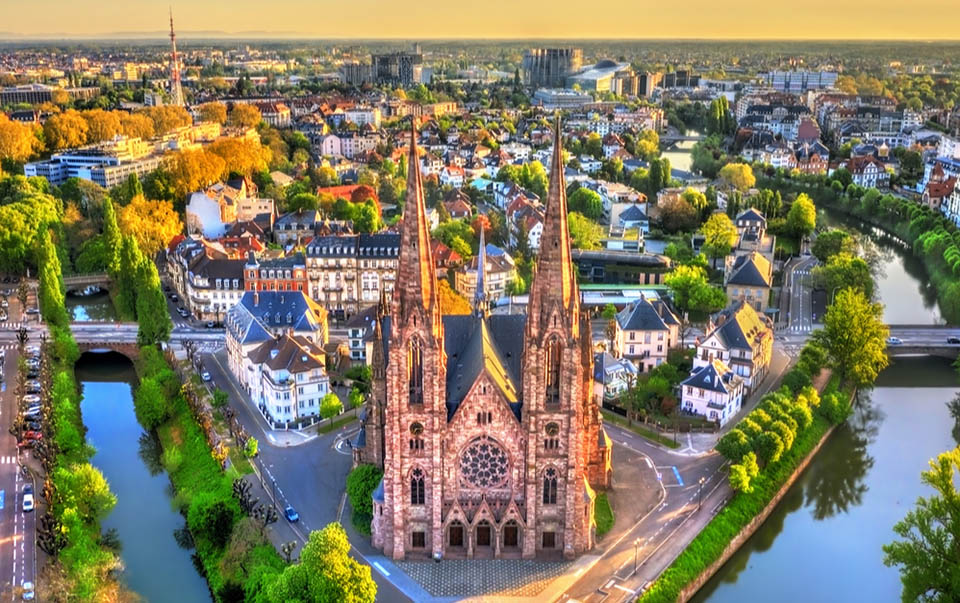
Leaving La Petite France behind, I made my way toward Strasbourg Cathedral (Cathédrale Notre-Dame). Viewed from a distance, its spire soared high into the clouds, while its Gothic carvings were of such exquisite beauty that they left me utterly breathless. The first time I stood before the main entrance of the cathedral and looked up, I was filled with a profound sense of awe—a grandeur derived not merely from its sheer scale, but from the weighty accumulation of history and art embedded within it.
Stepping inside, I watched as light streamed through the stained-glass windows, spilling onto the stone floor in a dappled array of colors that seemed like fragments of time itself. I walked slowly down the nave, noting how every statue and every vaulted arch was exquisitely crafted, as if every single stone had a story to tell—tales of both faith and the city.
I made a point of spending extra time lingering around the cathedral’s bell tower. The ascent required navigating a narrow spiral staircase—a climb that left me increasingly breathless—but when I finally reached the observation deck, the entirety of Strasbourg lay spread out before me. Red-tiled rooftops, winding canals, and the distant plains of Alsace—everything was bathed in a golden glow by the morning light. I stood there for a long time, feeling the breeze ruffle my hair, filled with a sense of reverence—the humbling realization that history lay right beneath my feet.
The European Parliament: The Pulse of Modern Politics
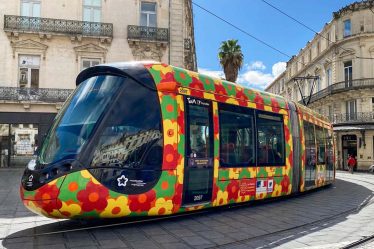
Leaving the ancient cathedral behind, I took a tram to the European Parliament (Parlement Européen). As one of the European Union’s most iconic institutions, its architecture stands in stark contrast to the historic quarters of the city center. With its thoroughly modern glass facades and metal structures, the building immediately struck me as a powerful embodiment of rationality and transparency.
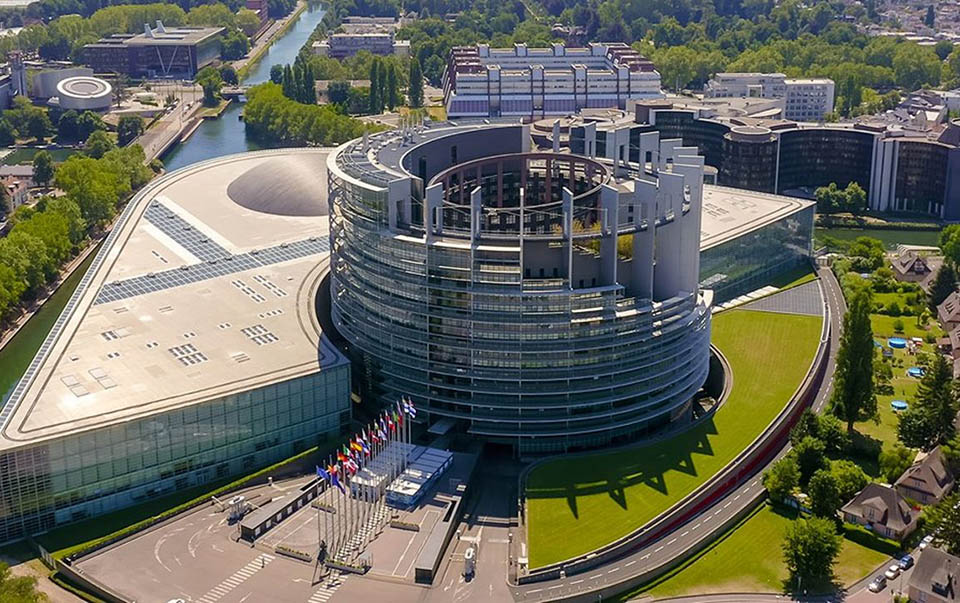
During the guided tour, I observed that the design of the parliamentary chamber was highly futuristic; every row of seats was arranged with meticulous precision, and every window was engineered to ensure the most uniform distribution of light possible. Walking through the corridors of the Parliament building, I suddenly realized that this city does not merely preserve the culture of the Middle Ages; it also occupies a pivotal position on the stage of modern European politics.
I tried to imagine the scene when parliamentarians are in session: people from diverse nations and cultural backgrounds debating, exchanging ideas, and engaging in intellectual discourse over shared issues. In contrast to the tranquility of “Petite France” or the solemnity of the cathedral, this place felt rational and composed—yet no less inspiring. Standing outside the Parliament building, I took a deep breath, sensing Strasbourg’s unique allure as a crossroads between France and Germany—a city that honors its history while looking resolutely toward the future.
A Stroll Through Cultural Fusion
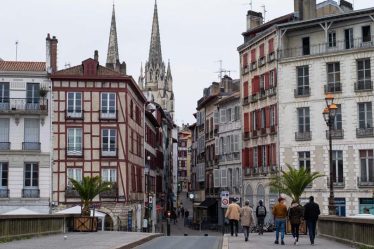
In the afternoon, I chose to simply wander aimlessly through the city center. The architectural styles lining the street are a fascinating blend: there are typical Alsatian half-timbered houses, elegant French Baroque facades, and even the occasional modern, minimalist storefront interspersed among them. I paused at a small shop to purchase some local almond candies and an apple tart. Sitting on a street-side bench, I savored my treats while observing the passersby.
The language spoken here is equally intriguing: sometimes I would hear French, other times German or a mixed dialect; even the menus displayed on the street often feature both languages side by side. I realized that this is precisely what makes Strasbourg so captivating: French and German cultures collide and merge here, with every minute detail serving as a reminder that this city possesses a dual soul.
As evening fell, I walked back to the canal to watch the sun slowly dip below the water’s surface. The red-tiled rooftops were bathed in a golden glow, streetlights began to flicker to life, and their reflections danced and shimmered upon the water. In that moment, it felt as though time itself had stretched out here, with every passing instant imbued with a sense of narrative.
Strasbourg Under the Night Sky: Immersed Between History and Reality
Later that night, I returned to the Petite France district; the streets had grown much quieter. The cafés remained aglow with warm, inviting light, while a few cats padded silently through the narrow alleyways. The reflections on the canal were gently stirred by the breeze, resembling a fluid, ever-shifting canvas. I found a bench by the water’s edge, set my backpack on my lap, and sat in quiet contemplation, simply absorbing the city’s atmosphere.
I reflected on the day’s experiences: Petite France in the early morning light, the magnificent Cathedral, the modern European Parliament, the cultural interplay on the streets… Each experience was distinct, yet together they wove the unique tapestry of Strasbourg’s charm.
I whispered to myself: Strasbourg is not merely a tourist destination; it is more akin to a “living museum of history”—a place that allows you to feel the weight of the past while constantly reminding you that life here is still unfolding and evolving. As the night breeze swept past, I could almost hear history and modernity engaging in a quiet dialogue.
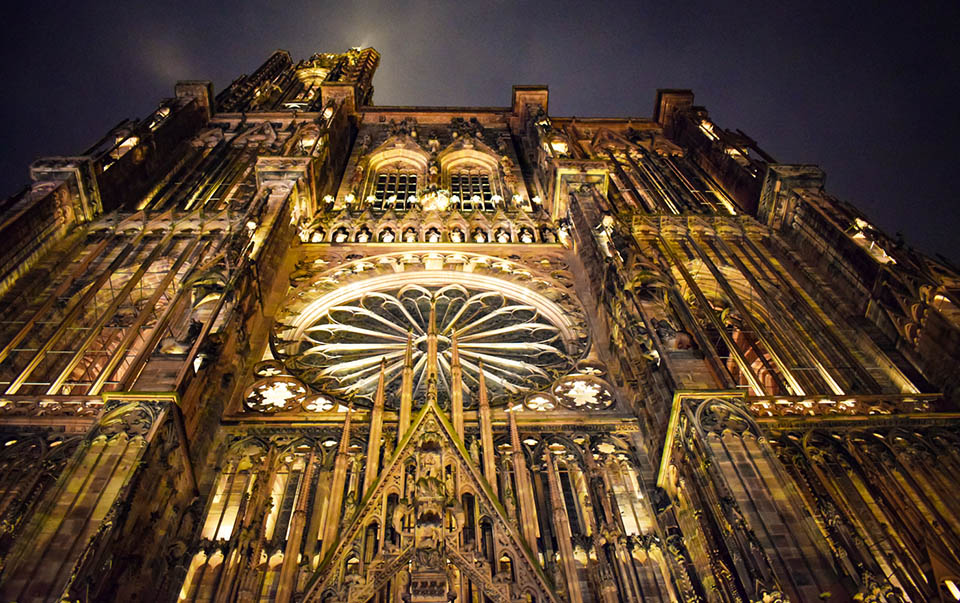
That night, I strolled slowly along the canal, savoring the memories of the day’s many moments. Amidst the deepening twilight, the red-tiled roofs, stained glass windows, shimmering canal waters, and glowing streetlights all intertwined to form a living masterpiece. For me, traveling is not merely about visiting tourist attractions; it is, rather, about immersing myself in the city’s very fabric—feeling the pulse of daily life and the ebb and flow of its culture.
The Charm of Strasbourg: Finding Balance Between France and Germany
As I departed Strasbourg, my lasting memory of the city was not tied to any single landmark, but rather to a holistic cultural impression: the romance and elegance of France interwoven with the precision and orderliness of Germany—qualities that blend seamlessly within its streets, architecture, canals, and even its cuisine.
With every breath I took and every step I walked, I sensed the city’s unique character; the convergence of French and German cultures is not merely a historical fact, but a living, tangible reality of modern life. What I carried away with me upon my departure were the shimmering reflections of Petite France, the solemn grandeur of the cathedral, the reasoned gravity of the parliamentary institutions, and the rhythmic cadence of the entire city as it flowed between the light of day and the hues of night.
Strasbourg taught me that a city’s true allure lies not in its sheer grandeur or bustling prosperity, but in its capacity to make one feel the depth of its culture, the weight of its history, and the warmth of its human spirit.