If my first impression of Marseille was defined by sea breezes and the harbor, what truly lingers in my memory is its taste.
In this French Mediterranean city, gastronomy is not merely an art of exquisite plating; rather, it is an authentic expression born of the ocean, the sunshine, and everyday life. During my few days in Marseille, I devoted most of my time to dining tables and bustling markets—from traditional fish stews to olive-oil-drizzled bread, and on to fusion seafood dishes—with every bite feeling like a taste of the city’s very character.
My First Bouillabaisse: The Soulful Flavor of the Harbor
In Marseille, my first truly “local” culinary experience was the renowned Bouillabaisse (Marseille Fish Soup).
I had heard about this dish countless times before my arrival, yet as I sat in a restaurant by the Old Port, waiting for it to be served, I still felt a flutter of nervous anticipation—the kind that comes from having expectations set perhaps a little too high.
The restaurant was situated right near the Old Port; through the window, I could see moored fishing boats and the gently lapping water. The waiter explained that this soup is simmered using a variety of fish caught that very day, making it one of Marseille’s most iconic traditional dishes.
Shortly thereafter, a steaming pot of fish soup was brought to my table.
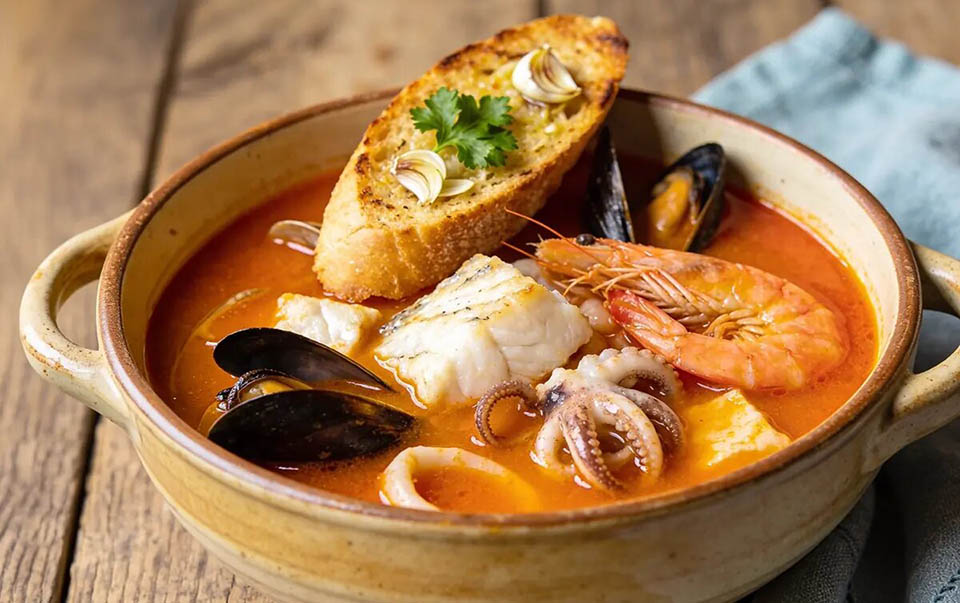
At first glance, it didn’t resemble a “soup” in the conventional sense; instead, it looked more like a golden-hued broth—a liquid essence of the ocean—in which faint traces of fish and seafood were just visible beneath the surface.
The waiter also brought out a side of garlic mayonnaise and toasted bread slices, instructing me to enjoy the dish in the traditional local manner.
I took a sip of the broth first.
The flavor is difficult to describe in simple terms: it held the salty tang of the sea, the rich depth of the fish, and a subtle sweetness imparted by tomatoes and saffron. The layers of flavor were incredibly rich, yet not overly complex—it was, quite simply, a “natural intensity.”
Next, I poured some of the soup over the bread and ate it together with the garlic sauce.
The bread softened as it absorbed the broth, while the aromatic garlic added a new dimension, giving the overall flavor a greater sense of depth and structure.
In that moment, I suddenly understood why this dish is hailed as the very soul of Marseille’s cuisine—not because of its high price tag, but because it is drawn, in its entirety, directly from the sea itself.
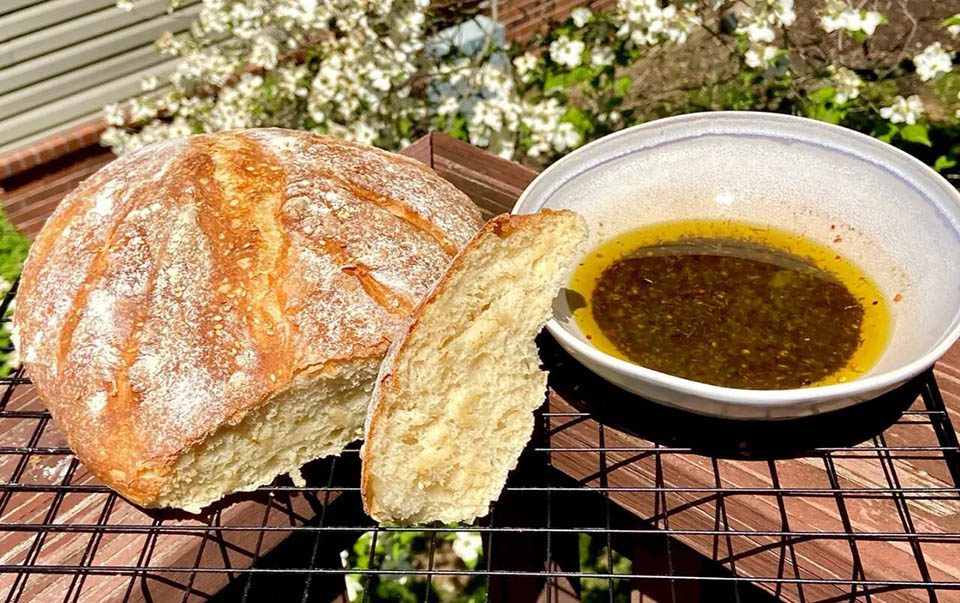
Olive Oil Bread: The Simplest, Yet Most Authentic Taste of Everyday Life
The following morning, while strolling near the Old Port, I stepped into a small local bakery.
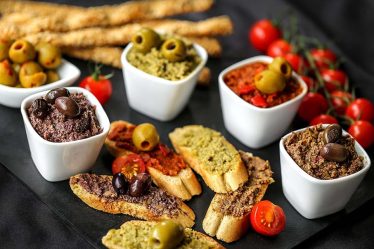
The shop was filled with the rich aroma of freshly baked bread; what caught my eye most was a local specialty known as Fougasse—an olive oil bread.
It had a distinctive appearance, resembling a leaf that had been deliberately stretched open; its surface was brushed with olive oil, giving it a subtle, glossy sheen.
I bought a piece fresh from the oven and ate it right there on the street corner.
With the very first bite, I found the crust to be slightly crisp, while the interior remained soft yet delightfully chewy. The scent of olive oil was distinct but never greasy; instead, it carried a fresh, herbaceous fragrance.
The most fascinating aspect was the evolution of its texture and flavor: the more I chewed, the more I could taste the natural sweetness of the wheat itself.
As I ate, I watched the ebb and flow of people on the street—fishermen pushing their carts, tourists snapping photos, and locals hurrying on their way.
In that moment, I realized that this bread was not merely “travel food,” but an integral part of daily life for the people of Marseille. It required no complex explanation, no elaborate packaging—it was simply straightforward, honest, and dependable.
Seafood Risotto: Capturing the Mediterranean in a Single Dish
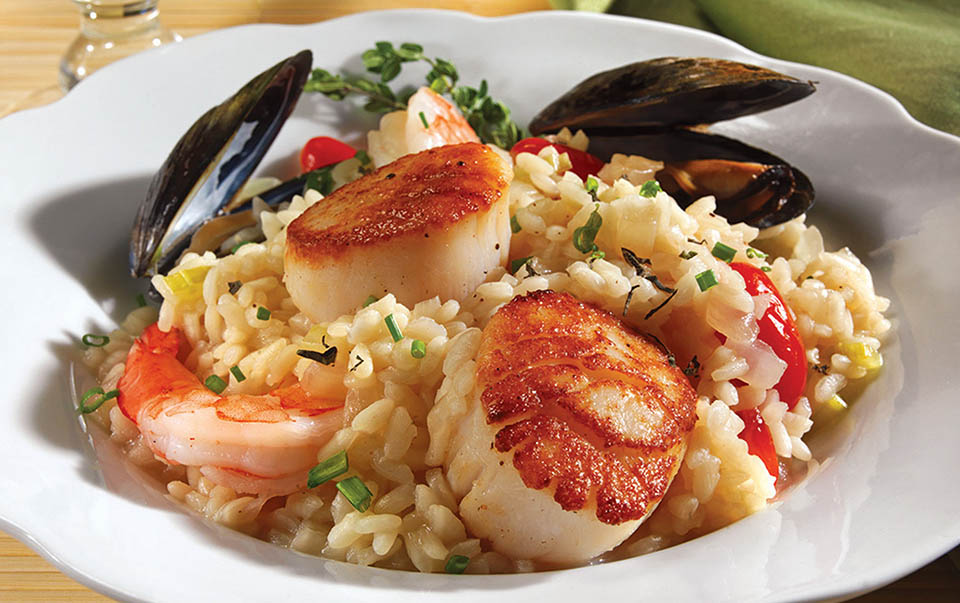
On my third evening in Marseille, I visited a highly-rated family-run restaurant to try a fusion-style dish: Ratatouille de la Mer (Seafood Risotto).
The restaurant had a humble, unpretentious atmosphere—devoid of lavish decor, yet bustling with patrons. The walls were adorned with vintage photographs chronicling the history of Marseille’s fishing port.
When the dish arrived, I was immediately captivated by its vibrant colors.
The rice glowed with a tapestry of golden-yellow and reddish-orange hues, blanketed with a generous assortment of shrimp, mussels, squid, and chunks of fish, all garnished with tomatoes, eggplant, and green peppers.
It didn’t look like a piece of haute cuisine; rather, it resembled a hearty, everyday seaside meal.
I took a bite of the rice first.
The grains had fully absorbed the seafood stock, imbuing them with a rich, oceanic essence, while simultaneously retaining the delightful sweet-and-tangy notes of the tomatoes. As I moved on to the seafood components, I noticed that each ingredient offered a distinct texture: the shrimp was firm, the mussels were tender, and the squid had a slight springiness.
What surprised me most was the overall sense of balance.
No single flavor in this dish stood out above the rest; instead, all the ingredients blended together to create a unified “flavor of the seaside.”
As I ate, gazing out the window at the streets gradually dimming with the fading light, I suddenly felt that this dish was much like Marseille itself—diverse and eclectic, yet unified against the backdrop of the same vast sea.
Flavors of the Market: Marseille’s World of Everyday Ingredients
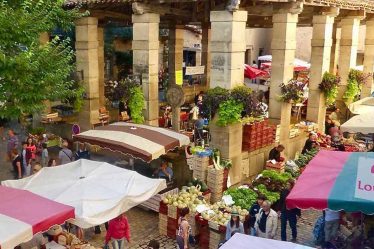
Beyond the restaurants, I made a point of visiting the seafood market near the Old Port.
The market was bustling in the early morning; fishermen displayed their day’s catch directly on their stalls, with various species of fish arranged in neat rows—some still faintly glistening.
The air was a blend of seawater, ice, and the scent of fish—yet far from being unpleasant, it offered a visceral sense of “real life.”
I chatted briefly with one of the stall owners, who explained that the richness of Marseille’s bouillabaisse stems from the local custom of simmering a mixture of various small fish, rather than relying on a single species.
This “blended” approach to cuisine actually mirrors Marseille’s cultural background—a port city serving as a crossroads for diverse ethnicities and a hub for centuries of trade and exchange.
Here, food is not merely sustenance; it is a living continuation of history.
Tables and Sea Breezes: The Unique Dining Atmosphere of Marseille
In Marseille, the setting is almost as important as the food itself.
Whether dining at a restaurant by the Old Port or grabbing a bite at a small corner bakery, the sea breeze is a constant presence.
Sometimes, sitting at an outdoor table—watching the seagulls soar overhead and the fishing boats sail in and out of the harbor—I would experience a curious illusion: that the dining table and the city itself were inextricably linked.
Unlike major metropolises that prioritize efficiency or haute refinement, the pace of dining here is delightfully unhurried.
People take their time over a meal, often lingering at their tables long after the last bite to chat and sip their coffee.
This experience of “slowing down” lends a richer, more multi-dimensional quality to the flavors of the food.
The Flavors of Marseille by Night: Simple, Yet Warm
On my final evening in Marseille, I opted against a high-end restaurant; instead, I simply wandered near the harbor and found a small, unassuming bistro. I ordered a glass of white wine and a simple seafood platter.
There was no elaborate plating, nor any sense of ceremony—yet the flavors were remarkably direct.
The grilled shrimp carried the smoky aroma of charcoal, while the oysters offered the crisp, cool essence of the sea; every single bite felt incredibly “clean.”
I sat in the dimly lit outdoor seating area, gazing at the distant harbor lights, letting my mind drift as I ate.
In that moment, I suddenly realized that the cuisine of Marseille need not be “categorized”; rather, it is—first and foremost—a way of life.
The Flavor of Marseille: Born of the Sea, Born of Life
After several days of culinary exploration in Marseille, I found that what lingered in my memory was not the name of any specific dish, but rather a holistic sensory impression.
The richness of the bouillabaisse, the rustic simplicity of the olive oil bread, and the abundance of the seafood risotto—together, they form a distinct culinary language of the Mediterranean.
The gastronomy of this city is neither overly packaged nor deliberately complicated; instead, it springs forth organically from the sea and from the rhythms of daily life.
As I departed Marseille, the images that surfaced in my mind were not those of tourist landmarks, but rather the aroma of that bowl of fish soup, the taste of that freshly baked bread, and the feel of the sea breeze at a harborside table.
It is these flavors that make Marseille feel so authentic—and so unforgettable.