If the first impression France typically evokes is the romance and elegance of Paris, then Marseille possesses an entirely different temperament—a rugged, vibrant, and sea-scented Mediterranean city. It is one of France’s oldest cities and a vital port on the Mediterranean. To me, Marseille is not a destination for “polished tourism,” but rather a city brimming with the authentic pulse of real life.
During my few days in Marseille, I strolled along the harbor, climbed the hills to gaze down upon the city, took a boat trip into the national park, and explored museums where the city’s history unfolded in layers before my eyes. Every location possessed a powerful sense of presence—one that simply could not be ignored.
The Old Port: Where the City’s Heartbeat Begins
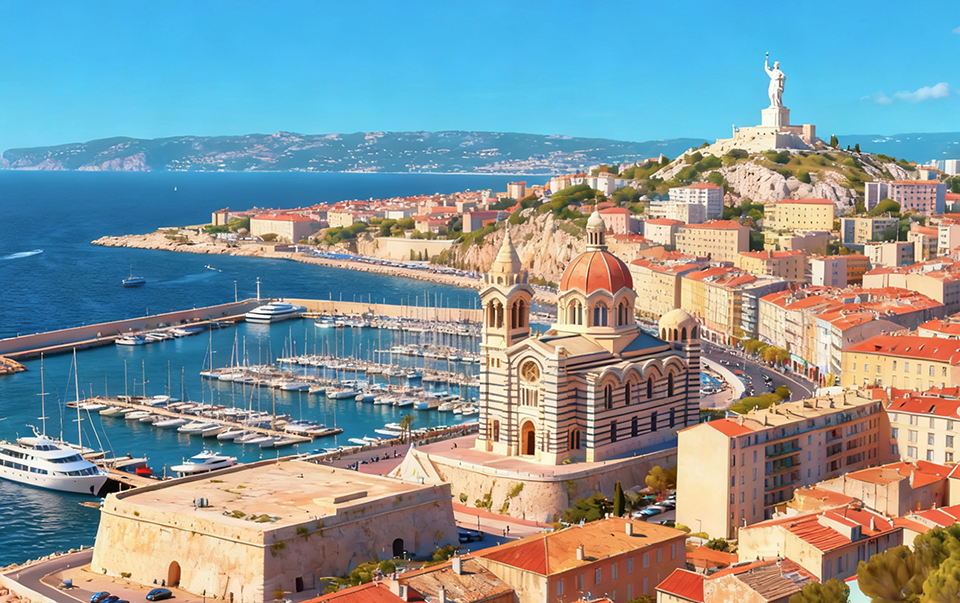
My very first stop upon arriving in Marseille was the famous Vieux-Port (Old Port).
In the early morning, the Old Port still retains a quiet tranquility; fishing boats sit neatly moored on the water, and the sea breeze drifts in gently, carrying the salty, damp scent of the ocean. The cafés lining the waterfront have just opened their doors, and staff members are busy wiping down tables and chairs, preparing to welcome the day’s first patrons.
I found a table right by the water, sat down, and ordered a coffee. Watching the harbor gradually come to life was a truly unique experience. Fishermen began unloading their catches, fresh fish were laid out directly onto market stalls, tourists slowly started to gather, and street performers began tuning their instruments.
By midday, the scene had transformed completely.
The crowds thickened, restaurants were packed to capacity, and the sea breeze was now laced with the aromas of seafood and spices. I strolled leisurely along the harbor, watching as tour boats lined up, fully prepared to whisk visitors out to sea.
It was here, too, that I booked my boat ticket for a trip to the Calanques National Park—an excursion that would become the highlight of my day.
Notre-Dame: The Vantage Point Overlooking the Entire City
In the afternoon, I set off toward the Basilique Notre-Dame de la Garde.
Perched atop a hill, this basilica stands as one of Marseille’s most iconic landmarks. From a distance, it resembles a lighthouse, standing guard over the entire city.
I chose to make the ascent on foot—a decision that, as it turned out, proved to be somewhat “challenging.” The ramp ascended steadily, and the sunlight grew increasingly intense; yet, with every stretch of the path I covered, the view of the city unfolding behind me became ever more expansive.
When I finally reached the summit, the scene that greeted my eyes made me instantly forget my fatigue.
The entirety of Marseille lay spread out before me: the azure Mediterranean, the dense urban sprawl, the distant mountain ranges, and the tiny vessels bobbing in the harbor. A brisk wind was blowing—cool and refreshing against my face.
Inside the basilica, a completely different atmosphere prevailed; golden ornamentation stood in striking contrast to the serene stillness of the space. I lingered briefly, listening to the hushed conversations of visitors and the silent prayers of those deep in devotion.
Standing there, I truly grasped—for the very first time—the significance of the title “Gateway to the Mediterranean.” Marseille serves not merely as a link to the sea, but as a bridge connecting history with the present day.
Calanques National Park: The Awe-Inspiring Blue Coastline
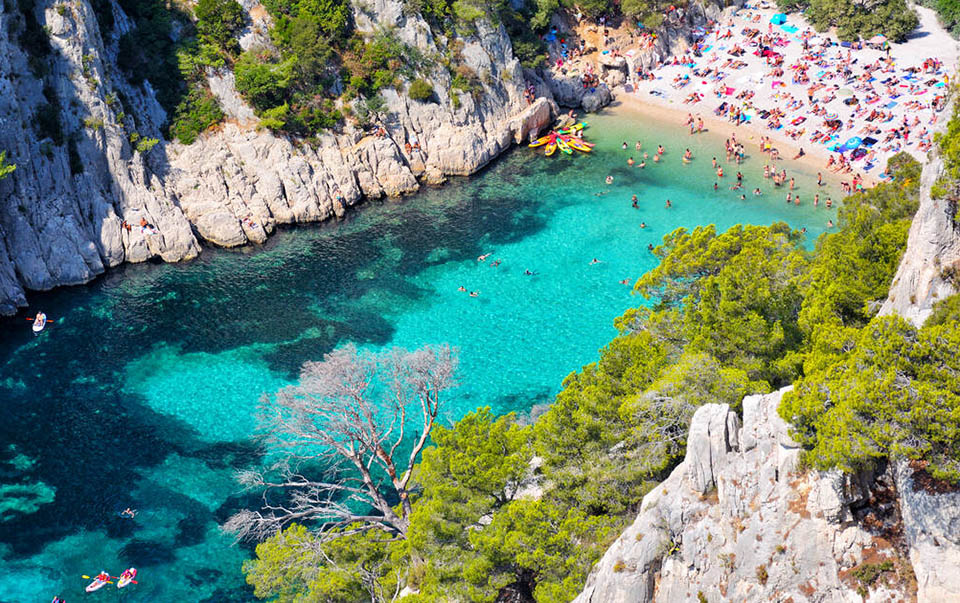
Early the next morning, I set off for the long-anticipated Calanques National Park.
Situated between Marseille and Cassis, this region is renowned for its sheer white limestone cliffs and crystal-clear turquoise waters—widely regarded as one of France’s most breathtaking natural landscapes.
Our boat departed from the Old Port; as the city gradually receded into the distance, the color of the sea deepened, shifting to a richer, more profound blue.
Approximately an hour later, the coastline began to take on a dramatic character.
Massive white rock faces rose sheer from the sea, carving out narrow coves and secluded gorges. Sunlight glinted off the rocks, reflecting a dazzling white radiance, while the water below displayed a mesmerizing gradient of blues and greens—shifting seamlessly from pale azure to deep indigo.
I sat by the boat’s rail, speaking barely a word, doing nothing but snapping photographs—though I soon realized that no number of pictures could ever fully capture the sheer awe inspired by that scene.
Occasionally, the boat would pull close to a small cove, and visitors would dive into the water for a swim. The sight of people swimming amidst such a pristine, virtually untouched natural environment left a deep and lasting impression on me.
The sea breeze, the rhythmic sound of the waves, and the warm sunlight all intertwined; in that moment, I felt utterly removed—far from the city, and far from the routines of everyday life.
MuCEM: The Crossroads of History and Modernity
Upon returning to the city center, I made my way to the Museum of European and Mediterranean Civilisations (MuCEM). Situated by the sea, the museum itself is a strikingly modern structure—composed of concrete and intricate lattice-work—that stands in stark contrast to the ancient fortress adjacent to it.
From the outside, it resembles a black geometric form floating at the water’s edge.
I walked across the connecting bridge to enter the museum; with modern architecture on one side and historical ruins on the other, this spatial juxtaposition compelled me to begin contemplating Marseille’s urban identity even before I had stepped foot inside the exhibition halls.
The exhibitions revolve around the theme of Mediterranean civilization, spanning everything from ancient trade routes and the history of migration to contemporary cultural fusion.
What left the deepest impression on me was the theme of “flow”—how people, cultures, goods, and languages have been in constant exchange across the Mediterranean basin.
As I exited the exhibition halls, I stood on the rooftop terrace, gazing out at the scene where the harbor met the city. In that moment, I realized that Marseille is not a city of a singular culture, but rather a place that has long been shaped by this ceaseless flux.
Harbor at Dusk: Marseille’s Most Tender Moment
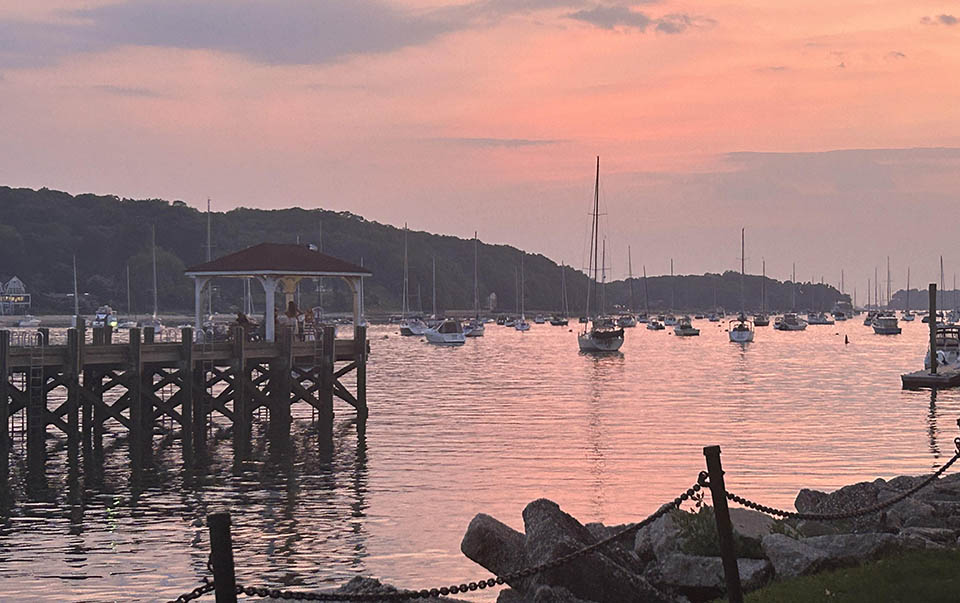
On the evening of my final day in Marseille, I returned once more to the Old Port.
The harbor at dusk is a world apart from its daytime self.
The sunlight softens, the sea surface takes on a golden sheen, and the silhouettes of the fishing boats appear quiet and unhurried. The street music, too, grows subdued; the entire city seems to slip into a state of gentle transition.
I sat on a seaside bench, watching the sun slowly sink beneath the horizon.
In this moment, there were no scheduled itineraries, no tasks to capture photographs—only the simple act of “being present.”
I suddenly understood that Marseille’s true allure lies not merely in its specific landmarks, but in this ever-shifting rhythm—a rhythm that is at once bustling and tranquil, rugged and tender.
Leaving Marseille: The Sea Breeze Lingers in Memory
On the day I departed Marseille, I passed by the Old Port one last time.
The harbor in the early morning looked just as it had when I first arrived, yet I knew that I myself had changed.
In the span of just a few days, I had taken in panoramic vistas from the hilltops, traversed the coastline of the national park, delved into history within the museum’s walls, and experienced the most ordinary fragments of daily life on the city streets.
Marseille is not a “polished tourist city,” yet it is precisely for this reason that it feels so authentic.
As the plane took off and the Mediterranean Sea outside my window gradually shrank from view, the image that lingered in my mind was not that of any single landmark, but rather a holistic memory—a blend of sea breeze, sunlight, and the vibrant hum of the city. Marseille is a city that will not be easily forgotten, for it captivates not with “perfection,” but leaves its mark through “authenticity.”